
KIT at Hannover Messe 2026
Additively manufactured multi-material ceramics for high-tech applications, collaborative industrial robots for flexible production processes, more precisely calibrated optically guided robotic systems, as well as new concepts for climate-friendly energy supply and mobility: From April 20 to 24, 2026, the KIT will present current developments from research, technology transfer, and spin-offs at Hannover Messe. The exhibits at booth B06, Hall 11 span manufacturing and automation technologies, energy solutions, and extend to quantum technologies and fusion research.


Multi-material Ceramics
The future of high-tech applications thanks to additive manufacturing
Researchers at the wbk Institute of Production Science at KIT have developed a material system that enables two different ceramic materials to be combined into a single component directly during the printing process. This provides the basis for multi-material additive manufacturing (MMAM), which makes it possible to deliberately integrate different functional, mechanical, electrical, or thermal properties within one component. The result is high-precision hybrid ceramics with locally tailored properties – for example, a hard outer edge combined with a porous core. Additional mechanical post-processing steps such as milling or turning are not required.
The process opens up new design and functional possibilities for prototyping and small-batch production wherever tailor-made, high-performance components are needed. Potential applications range from wear-resistant components in mechanical engineering and patient-specific bone and dental implants in medical technology to heat-resistant, lightweight, and high-strength structures for aerospace. Further fields include high-temperature-resistant and chemically inert ceramics for energy technologies as well as multi-material ceramic components for electronics and sensor technology.
Higher Accuracy for Vision-guided Robots
Fast, easy, and comprehensive robot calibration
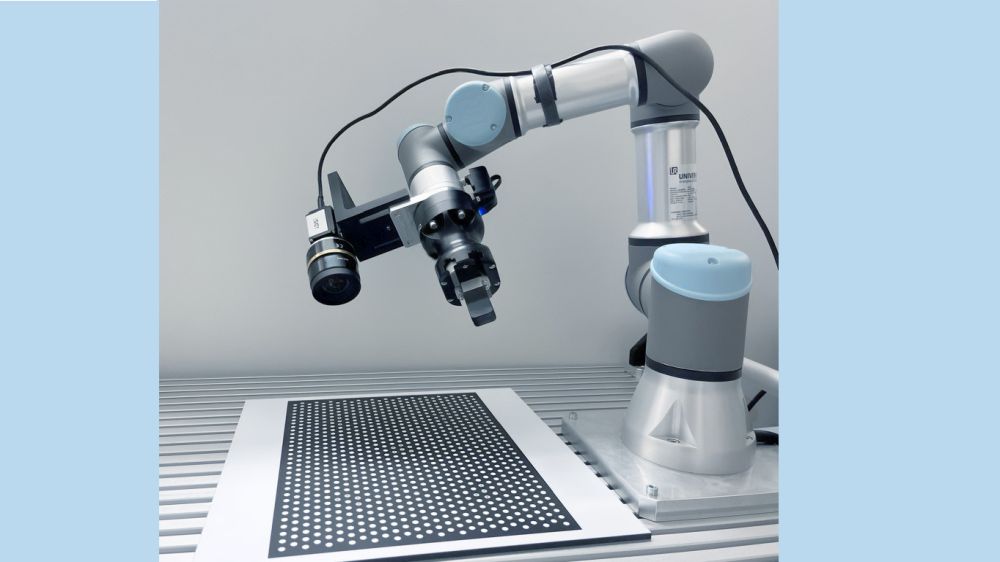
Use of industrial robots is standard in manufacture. When they are equipped with cameras, they can react flexibly to their environment. Robot calibration is essential in applications requiring a high accuracy: The robot’s geometry is determined, which means that the kinematic parameters are calculated. A new calibration method developed by KIT in cooperation with MVTec Software GmbH utilizes the robot’s existing camera for calibration – a fast and inexpensive method to reach high accuracy for vision-guided robots.
The new process requires no manual steps, does not require expensive specialized hardware, and can be performed inline—that is, without removing the robot—in just a few minutes. This minimizes costs and downtime. It can be flexibly adapted for use with various robot models. Furthermore, it enables simultaneous calibration of the entire system in a single step.

Collaborative Industrial Robots
Flexible manufacturing through intelligent teamwork
Through collaboration in production, physically coupled industrial robots enable complex manufacturing processes that have only been realized with conventional machine tools so far. Researchers of KIT, in cooperation with FZI Research Center for Information Technology, have developed a new control system that couples two robots, distributes the forces between them optimally, and regulates internal stresses. As a result, high manufacturing accuracies are achieved.
A demonstrator shows how two robotic arms, equipped with a tool-changing system, bend a workpiece and demonstrate a milling operation through a series of movements. To make the operation of collaborative robots intuitive and flexible, the IRS is developing not only control methodologies but also a user interface based on artificial intelligence (AI). The researchers’ goal is to make collaborative industrial robots suitable for a wide range of manufacturing processes, including in small and medium-sized enterprises.
Fusion – The Breeding Blanket
The crucial step to the first fusion reactor
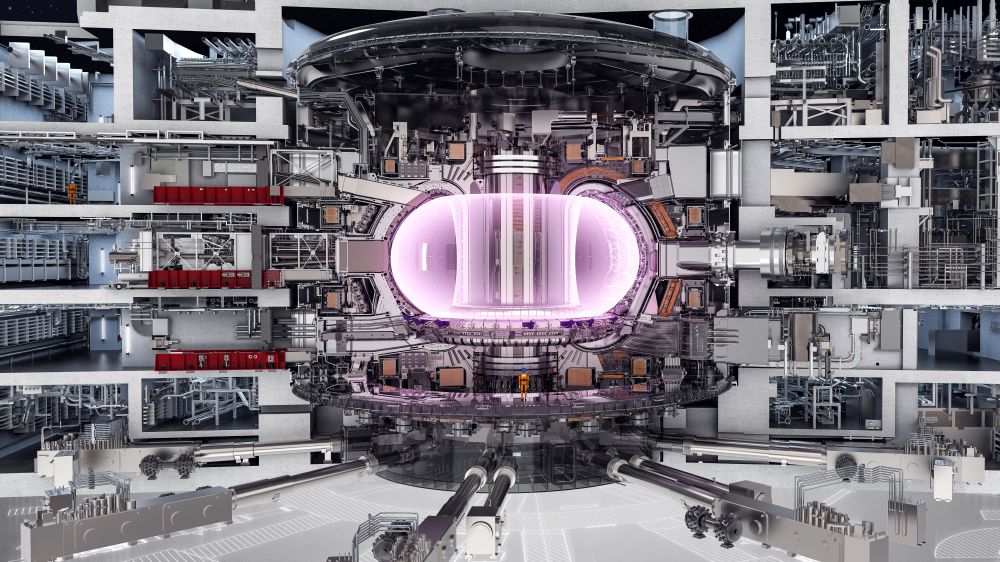
Nuclear fusion is deemed a key technology for the secure, climate-friendly energy supply in future. KIT researchers contribute to it by working on the heart of the reactor, the tritium breeding blanket (TBB). It is located between the plasma having a temperature of 150 million degrees Celsius and the near-zero superconducting magnets confining the plasma. This temperature difference poses a big technical challenge. At the same time, the TBB has to generate the tritium fuel that is indispensable for nuclear fusion. Development of the components opens up new perspectives for industry, examples being the production of durable materials and precision manufacturing technology.
The energy from the fast neutrons in the TBB is used not only to produce the fuel tritium, but also to generate high-quality heat. The EUROfusion consortium is exploring several TBB concepts. However, the so-called Helium-Cooled Pebble Bed (HCPB) is regarded as the reference design for a future nuclear fusion power plant. The core components of the HCPB-TBB are the pin monoblock and the fuel-breeder pins, which contain lithium oxide ceramic balls for tritium production, as well as lead-containing vessels to multiply the neutrons.

photreon
From solar photons to sustainable values
A photoreactor panel developed by KIT allows to produce hydrogen from nothing but water and sunlight. photreon’s patented design is suitable for mass fabrication of large batches and enables scalable production of low-cost green hydrogen. In this way, photreon makes the use of green hydrogen economically efficient and strengthens the competitiveness of companies and industry locations in Germany.
Photreon technology is suitable for the large-scale production of pure solar hydrogen for the global market in the sunniest regions of the world. As the photocatalytic process requires no electrical energy, there is no need to connect large-scale plants to the electricity grid. At the same time, Photreon is also attractive to businesses with low or medium hydrogen consumption. The simplicity of the design and the low investment costs enable consumers to become prosumers. A one-square-metre prototype of the photreon photoreactor panel is available.

Highly Efficient Gas Turbines
Energy-saving – performance-enhancing. Optimal for work with hydrogen
An innovative compressorless gas turbine is setting new standards for the use of hydrogen in energy supply. The detonation burner based on pressure-gain combustion technology achieved a record runtime of 303 seconds, which surpasses the previous NASA record of 250 seconds. No additional energy is required to compress the air prior to ignition. Unlike natural gas, hydrogen can be produced using renewable energy. With the compressorless gas turbine, KIT has taken an important step towards efficient, high-performance technology for green electricity generation using hydrogen.
The compressorless gas turbine is based on pressure-driven combustion: detonation waves in the combustion chamber generate the necessary high pressure. The coupled pressure and combustion waves thus create the thermodynamic conditions required to convert chemical energy without the need for mechanical compressors. This saves energy, reduces the number of moving parts and increases efficiency. Hydrogen is particularly well suited to this technology; however, it is not limited to hydrogen as an energy source.
Open-flow Electrolysis Cell
Green energy transition in the chemical industry
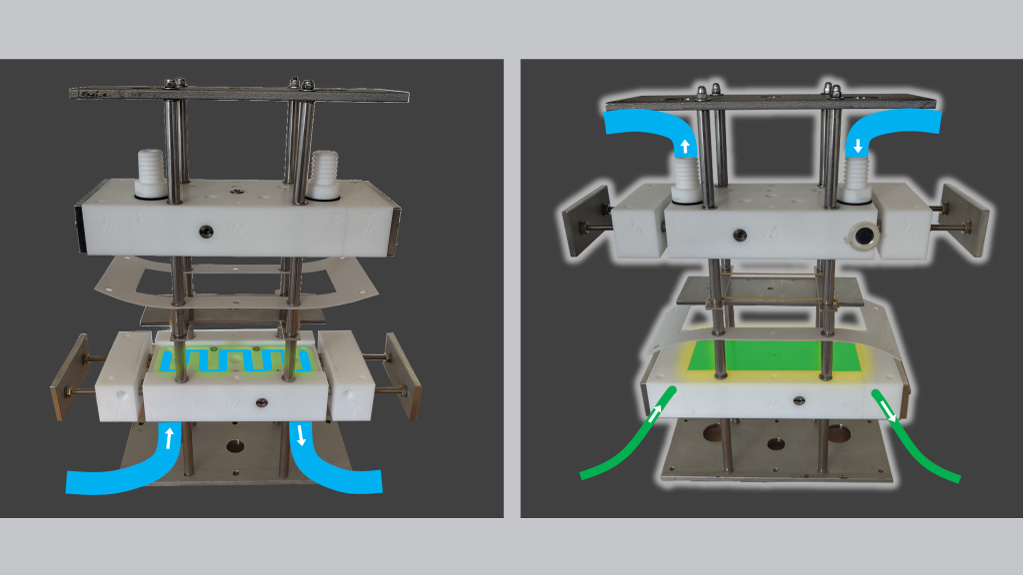
Partners from research and industry have established the ETOS innovation network to work on new processes making chemical production more sustainable. The focus lies on the power-to-chemicals concept, i.e., on using electrical energy, ideally from renewable sources, to produce chemicals. This will enhance the cost efficiency, safety, and ecological compatibility of chemical production processes. The open flow electrolysis cell is based on electrochemical synthesis processes in the flow mode. The reaction solution continuously flows through the cell and passes two electrodes. The electrical power applied there triggers the desired chemical reaction.
Flow reactors enable continuous and scalable production and are therefore particularly well-suited for transferring electrochemical processes from the laboratory to industrial applications. These processes are designed to utilize electricity from temporary surpluses of renewable energy sources. In this way, they not only contribute to sustainable chemical production but also play a key role in the energy transition.
Quantum Networks
New possibilities for eavesdrop-proof communication
Secure communication is indispensable in modern digital infrastructures. Quantum networks offer entirely new possibilities: They distribute secret keys for encryption by means of individual photons, with the laws of quantum physics ensuring security. Quantum key distribution encodes information into the quantum states of light. Any attempt to intercept communication inevitably changes these states and is therefore detected immediately. At KIT, researchers develop central technologies needed for the practical implementation of quantum communication.
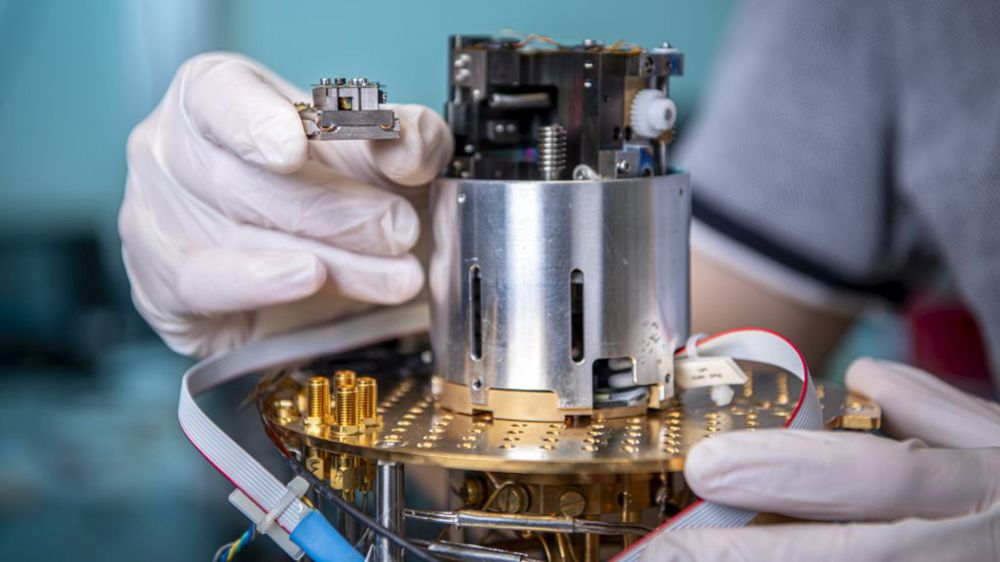
These include specialized light sources as well as cryostats—cooling devices used to bring quantum memory devices down to temperatures near absolute zero in order to stabilize their delicate quantum states. Such light sources and quantum memory devices form the core components of so-called quantum repeaters, which make it possible to establish quantum communication even over long distances. At KIT, a fiber-optic link installed between Campus North and Campus South connects both locations and serves as a real-world test site for such quantum communication experiments. In this way, KIT links basic research in quantum physics with the development of future quantum communication infrastructures.
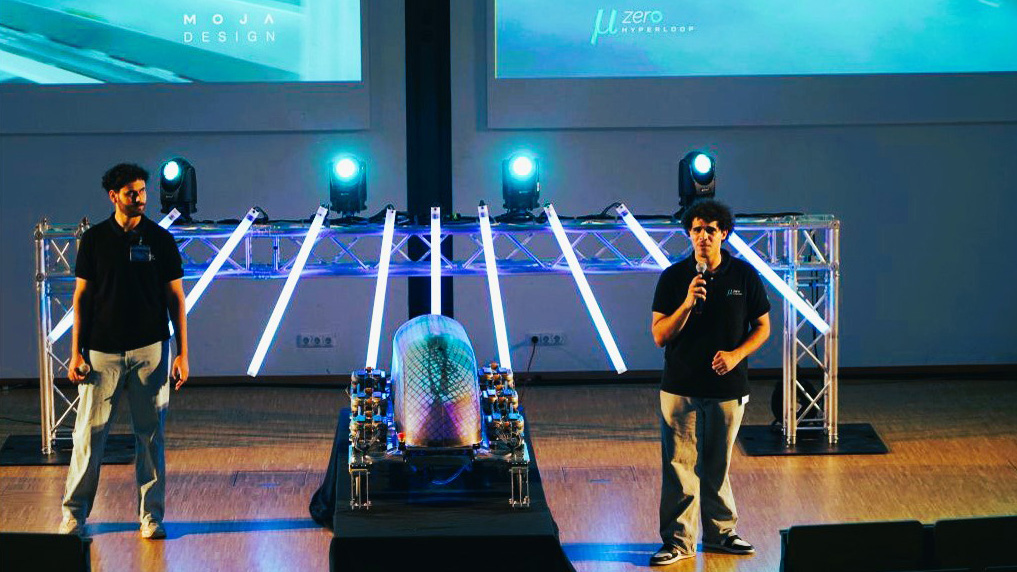
Hyperloop „Polaris“
Traveling at the speed of sound
Transport capsules move at high speed through largely evacuated tubes – this is the hyperloop concept. Initiatives all around the world focus on the hyperloop, among them the student club mu-zero HYPERLOOP e.V. at KIT. Hyperloop may establish itself as a fifth mode of transportation for future mobility along with road, rail, water, and air vehicles. Hyperloop considerably reduces travel time, energy consumption, and land use compared to conventional means of transportation.
The non-profit association mu-zero HYPERLOOP consists of around 60 students, approximately 88 percent of whom are international, representing eleven different fields of study. mu-zero HYPERLOOP benefits from close academic collaboration with institutes, laboratories, and researchers from various engineering disciplines. The team works closely with industry partners who share its vision of fast, sustainable, and resource-efficient transportation. The student club has already received numerous awards.


Project Manager Trade Fair, Congress, Event
 +49 721 608-29202
 oliver juergens ∂does-not-exist.kit edu
 www.km.kit.edu/english/index.php
 141 Campus Nord